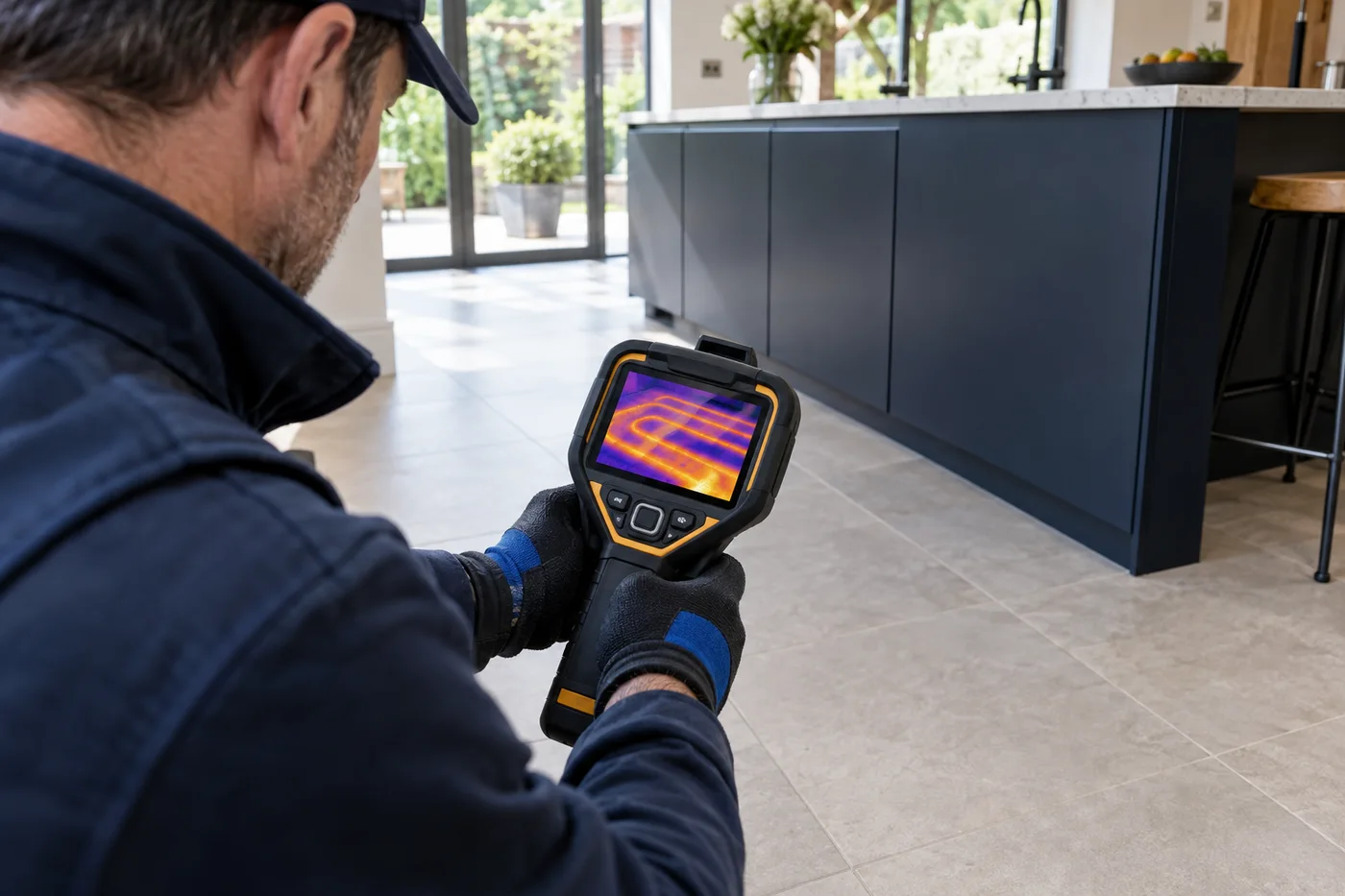
A thermal imaging camera records surface temperature differences that are invisible to the eye. During a leak detection investigation, those temperature patterns can help an engineer understand where heating pipework runs, where a floor is warming or cooling differently, and how moisture may be affecting a surface. The engineer interprets those surface patterns alongside checks on the water or heating system.
How thermal imaging works
The camera converts infrared energy from a surface into a temperature image. A warm central-heating pipe, a cooler damp area or an underfloor-heating circuit can create a pattern worth investigating. We compare that pattern with the property layout, system condition and other test results before deciding whether a hidden water leak is likely.
- 1
Understand the heating pattern
We review which rooms and circuits are affected and whether the heating was running when the symptoms appeared.
- 2
Scan and compare surfaces
The floor, wall or ceiling is assessed against nearby areas so a temperature difference can be considered in context.
- 3
Check the suspected area
Pipework tests and other observations help establish whether the pattern relates to a leak and where access may be useful.
When this equipment can help
- Central heating leak detection and recurring boiler pressure loss
- Wet underfloor heating pipe routes and circuit comparisons
- Damp walls, ceilings and floors where temperature patterns may provide a clue
- Checking conditions before targeted access and plumbing repair
EXAMPLE INVESTIGATION
A warm floor and a boiler that keeps losing pressure
For example, a homeowner notices pressure dropping and a warm patch beside the kitchen units. A thermal survey can help map the heating route, but warmth alone does not establish a leak. Assessing the circuit and comparing other findings helps decide whether a concealed heating pipe is the likely source.
Building the evidence with other methods
Thermal imaging is useful for deciding where to look more closely. Pressure testing can help assess the circuit; a moisture meter can compare affected materials; tracer gas may help trace a concealed failure. These methods answer different questions within the same investigation.
Thermal imaging measures the surface, not water inside a pipe. Sunlight, insulation, airflow, floor construction and recent heating use can all affect an image. We do not treat a colour change on screen as proof of a leak; we use it alongside pressure testing, acoustic leak detection or tracer gas where appropriate.
Compare leak detection methodsPreparing for an investigation
Please tell us how the heating has been behaving and keep the heating controls accessible. We will advise if the system needs to be running or isolated before we attend.
Tell us the property postcode, when the symptoms started and what has already been checked. Useful details include changes in water bills, boiler pressure, the location of damp patches and any recent building work.
Contact us about your hidden leak
We investigate and repair residential pipe leaks from our Windsor SL4 base, with appointments across the surrounding service area. Homeowners and residential landlords can enquire about the £1,195 package; commercial premises receive an individual quote.
Discuss your leak with usGOOD TO KNOW
Your thermal imaging questions
Can thermal imaging find a leak beneath tiles?
Sometimes a useful surface temperature pattern can be observed through a tiled floor. Tile, adhesive, screed, insulation and heating conditions all affect the pattern. Further checks are needed before choosing an opening.
Will it find cold water pipe leaks as well as heating leaks?
A cold water leak may affect the temperature of nearby materials, but the difference is not always visible. The engineer selects other suitable checks if thermal evidence is limited.
Do you also repair the leak?
Yes. We combine investigation, access and the plumbing repair in one residential package. We explain the proposed access before work begins and test the repair afterwards.
How does the £100 deposit work?
First, contact us about the leak. Once the job and appointment are confirmed, we send you a payment link for a £100 booking deposit. This is deducted from £1,195, leaving £1,095. Sending an enquiry does not take a payment or confirm an appointment.
Further technical reading
FLIR: thermal imaging and water leaks. Manufacturer guidance explains the technology; the equipment selected for your visit depends on the investigation.